

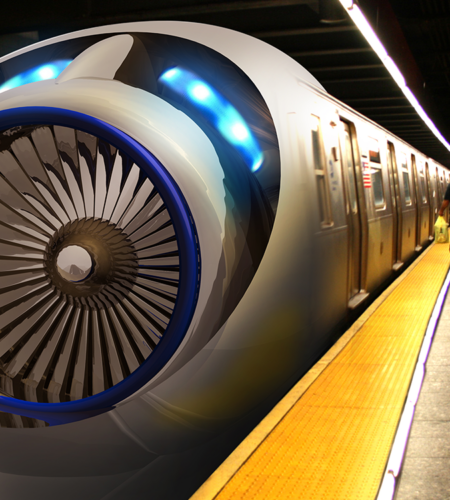
How we move through the world is on the cusp of a revolution. For decades, our daily commutes have relied on conventional cars, buses, and trains—methods that, while functional, are far from efficient or environmentally friendly. But with the rise of electric vehicles (EVs) and the futuristic promise of Hyperloops, we’re looking at a future where our commutes could be not just faster and cleaner, but also potentially enjoyable, transforming a mundane task into a thrilling experience.
Hyperloops: The Future of Speed
When Elon Musk first proposed the Hyperloop in 2013, it seemed more like a plot point from a science fiction novel than a realistic mode of transportation. Yet, just a decade later, several companies, including Musk’s Boring Company and Virgin Hyperloop, are working to make this idea a reality.
The concept is simple yet revolutionary: imagine traveling in a sealed pod through a low-pressure tube at speeds exceeding 600 miles per hour. The near-vacuum environment drastically reduces air resistance, allowing the pod to glide with minimal friction. This not only makes the journey faster but also significantly reduces the carbon footprint of travel. Hyperloop technology could reduce a commute that takes hours by car to just minutes, all while being more environmentally friendly.
Currently, Hyperloop projects are in various stages of development around the world. The most notable progress is in the U.S., where routes are explored between major cities like Los Angeles and San Francisco. If successful, these routes could radically change how we think about distance, shrinking vast expanses of land into commutable areas.
Electric Vehicles: The Quiet Revolution
While Hyperloops are still in the experimental phase, electric vehicles are already here and here to stay. What started as a niche market dominated by Tesla has now exploded into a global movement, with major automakers like Ford, GM, and Volkswagen all betting on electric. This shift is not just a trend, but a significant change in the automotive industry, and you, as a consumer, are part of it.
The appeal of EVs goes beyond their eco-friendly credentials. They’re quieter, often more powerful, and increasingly cost-competitive with their gasoline counterparts. Battery technology advancements have eliminated range anxiety, with newer models offering 300 miles or more on a single charge.
But the real game-changer might be how EVs integrate with our homes and cities. Innovations in vehicle-to-grid technology could turn your car into a mobile power source, capable of feeding energy back into the grid during peak demand. In cities, EVs could be part of a more extensive intelligent transportation network, where cars communicate with each other and traffic systems to optimize flow and reduce congestion.
Impact on Urban Planning
As these technologies mature, they’ll profoundly impact how cities are designed. Imagine a world where Hyperloop stations replace airports as the central hubs of travel, with high-speed pods whisking commuters from the suburbs to the city center in minutes. The reduced need for parking and the quieter, cleaner streets could lead to more green spaces and pedestrian-friendly areas.
Moreover, the rise of EVs and autonomous vehicles could make roads safer and less congested. With cars able to communicate with each other and with city infrastructure, traffic jams could become a thing of the past. And with fewer emissions, the air quality in cities could dramatically improve, making urban living not just healthier, but also more enjoyable and hopeful for a cleaner future.
Challenges and Criticisms
Of course, these changes won’t happen overnight and won’t come without challenges. The cost of building Hyperloop infrastructure is astronomical, and significant engineering hurdles remain to overcome. Regulatory approval will be another major hurdle, as governments will need to create new frameworks to oversee these new modes of transportation.
While promising, EVs also face challenges. The transition away from fossil fuels is fraught with logistical and economic complexities. Battery production requires rare materials like lithium and cobalt, which raises concerns about supply chain sustainability and environmental impact.
The Road Ahead
Despite these challenges, the future of transportation looks incredibly promising. Hyperloops and EVs represent a significant leap forward in our thinking about mobility. They offer the potential not just to improve our daily commutes but to fundamentally change the way we live and interact with our cities. Imagine a world where long commutes are a thing of the past, where we can live further from our workplaces without sacrificing time with our families. This is the future that Hyperloops and EVs could bring.
As these technologies continue to develop, we’ll need to address the challenges they bring with them. But if we can overcome these obstacles, the future of transportation could be cleaner, faster, and more efficient than ever before.
