

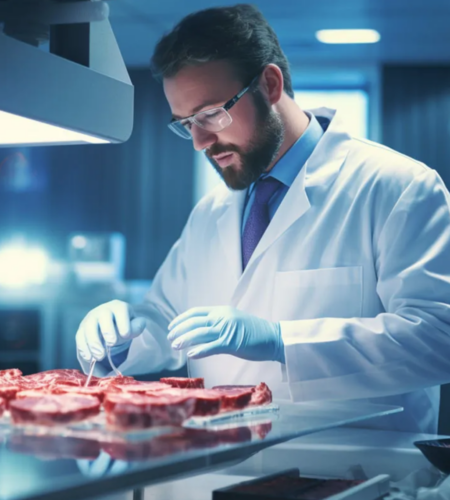
As the world confronts the environmental impact of traditional agriculture, the food industry is turning to innovative solutions to meet the increasing demand for sustainable and ethical food sources. Lab-grown meat, a concept that was once confined to science fiction, is now on the verge of transforming how we produce and consume protein. This article delves into the technology behind lab-grown meat, its potential benefits, and the broader trends in sustainable dining that are shaping the future of food.
The Science Behind Lab-Grown Meat
Lab-grown meat, also known as cultured meat or cell-based meat, is produced by cultivating animal cells in a controlled environment. The process begins with a small sample of animal cells, and those are put into a nutrient-rich culture medium. These cells proliferate and differentiate to form muscle tissue, mimicking the natural growth of meat in an animal’s body. The resulting product is biologically identical to meat that’s produced by natural means, but there’s no need for raising and slaughtering animals.
Environmental and Ethical Benefits
The environmental benefits of lab-grown meat are substantial. Traditional livestock farming is a major contributor to greenhouse gas emissions, deforestation, and water consumption. In contrast, lab-grown meat production is resource-efficient and generates minimal pollution. Moreover, lab-grown meat addresses ethical concerns related to animal welfare, providing a cruelty-free alternative to traditional meat production. This technology has the potential to revolutionize the food industry by offering a more sustainable and humane way to meet the global demand for meat.
Sustainable Dining Trends
Beyond lab-grown meat, several other trends are shaping the future of sustainable dining:
- Plant-Based Alternatives: Products like Beyond Meat and Impossible Foods are gaining popularity, offering plant-based alternatives that mimic the taste and texture of meat. These products appeal to both vegetarians and meat-eaters seeking to reduce their environmental footprint.
- Vertical Farming: Vertical farms use stacked layers to grow crops in controlled environments, maximizing space and reducing the need for pesticides and transportation. This method can produce fresh, local produce year-round, even in urban areas.
Zero-Waste Cooking: Chefs and home cooks are embracing zero-waste principles, demonstrating their resourcefulness by finding creative ways to use every part of an ingredient. This trend not only reduces food waste but also inspires us to be more resourceful in the kitchen, highlighting the importance of sustainability in our daily lives.Innovative technologies and sustainable practices are shaping the future of food. Lab-grown meat represents a significant leap forward in addressing the environmental and ethical challenges of traditional meat production. Alongside other sustainable dining trends, it offers a glimpse into a future where our food systems are more efficient, humane, and environmentally friendly. As these innovations continue to develop, they hold the promise of transforming how we produce, consume, and think about food.
